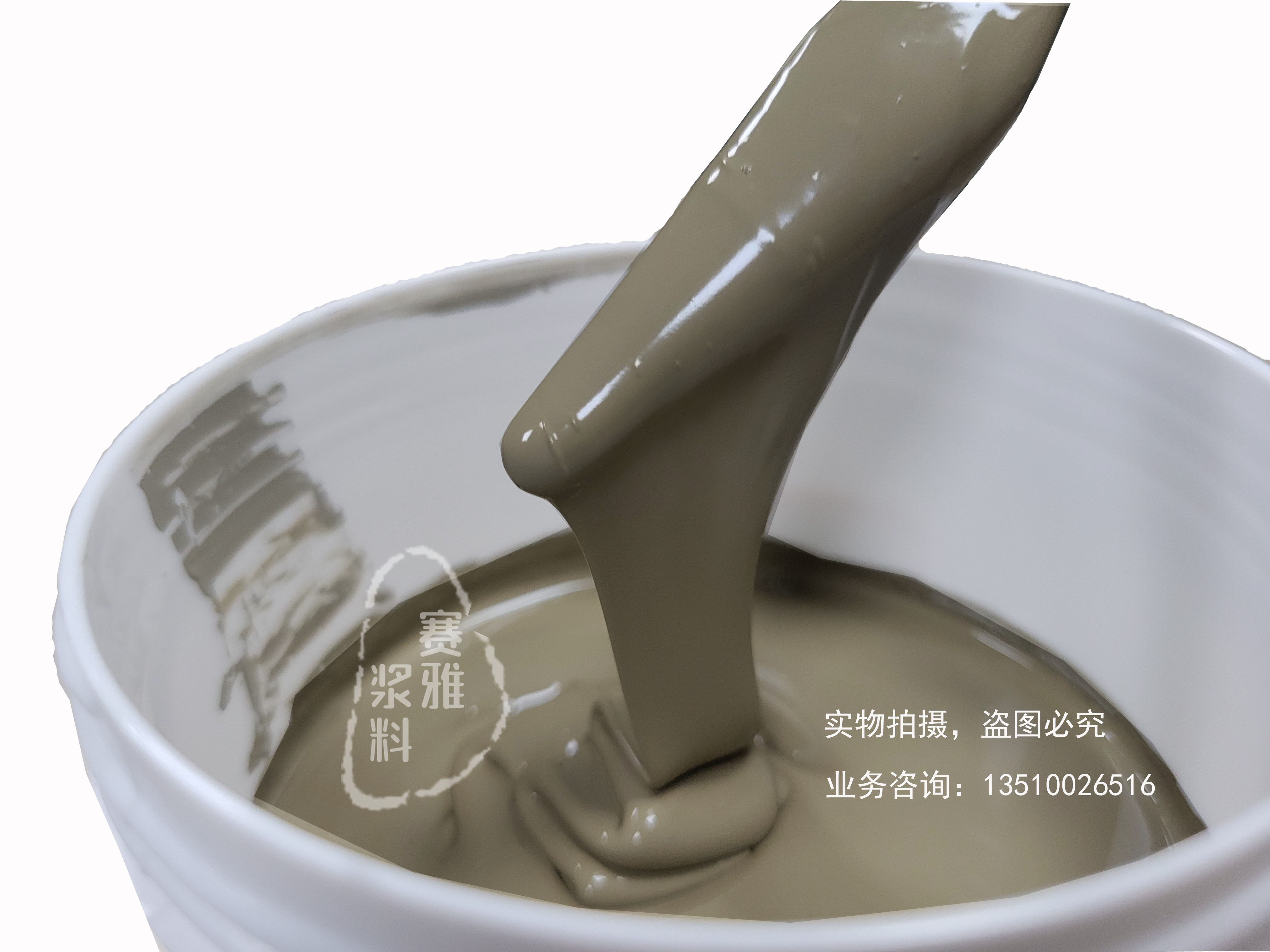
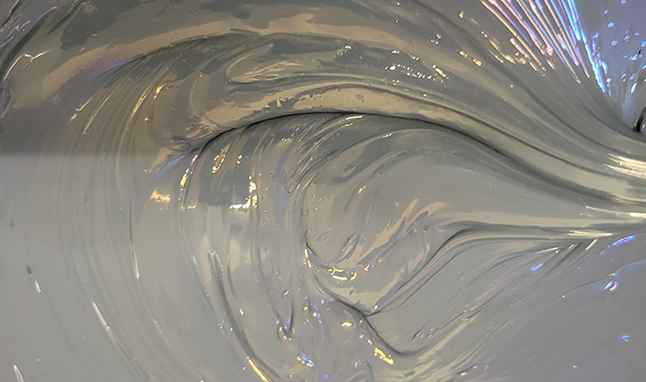
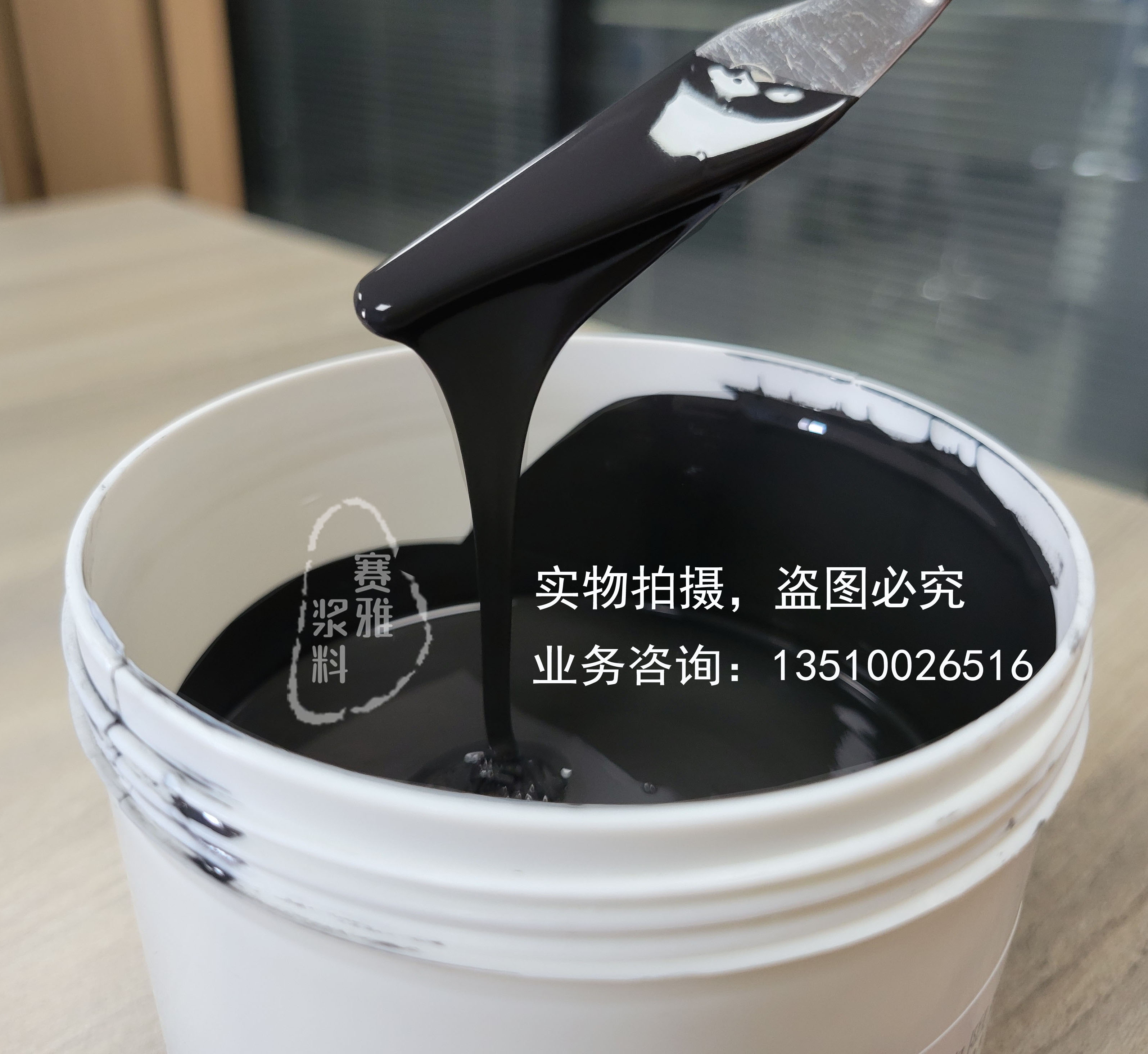
High-temperature sintering type pastes, especially silver pastes and resistance pastes,
Users often report that the sintered film is not bright enough and appears dull and yellowish?
Why is the resistance of the printed resist paste larger at the periphery and smaller in the middle after it is fired?
Why are there various issues around the periphery of the same sintered plate? Such as blackening, silver spots, and increased resistance?
First of all, let me explain that the organic substances in the sintering type slurry exist in two forms. One is the organic solvents and various additives, which are released at a temperature range of 150℃ to 250℃ during the sintering process. The other is the resin, which is released within a temperature range of 300℃ to 400℃, concentrating around 350℃, and is completely discharged from the film layer at 400℃.
The slurry sintering furnaces can be mainly classified into two categories: one is the chain-type sintering furnace, and the other is the box-type furnace. The problems that are reported are mostly from the box-type furnaces, and the types of problems are diverse and the conditions vary greatly.
Now let's talk about the reasons. The chain-type sintering furnace has a large space, usually with at least four or five temperature zones, and some furnaces even have more than ten temperature zones. This allows for better staged temperature setting, ensuring a smaller temperature difference and better uniformity and stability of the temperature. Additionally, the inlet and outlet of the chain-type furnace are ventilated, and the front temperature zone has a dedicated exhaust pipe. At low temperatures, organic substances can be smoothly discharged, ensuring a clean atmosphere inside the furnace.
However, for box-type furnaces, the conditions are somewhat worse. The furnace cavity is relatively small, and some even lack exhaust holes. This will cause the organic substances in the slurry to be retained in the furnace after being discharged during the sintering process. As the temperature rises, these organic substances carbonize and adhere to the surface of the sintering film, forming a layer of carbonized film. This results in the film layer not being bright and appearing dark and yellowish.
In terms of heating, there are some pre-buried heating wires and some rod-shaped heating wires made of silicon carbide, etc. This results in the temperature around the heating wires being much higher than the temperature in the middle of the furnace body. Generally, the temperature can be several degrees higher, and in some cases, it can even reach around 100 degrees Celsius. The temperature of the heating wires is the highest, while the deepest part inside the furnace body has a slightly higher temperature. The temperature at the furnace door is lower. Only the middle part of the furnace has a relatively uniform temperature, close to the set value. The differences in temperature among various parts of the furnace body lead to significant color variations in the products after being fired. For silver paste, there can be different faces, and even in the same film layer, some parts may overheat and melt into silver beads, while others may not be fully sintered. For resistors, it is manifested in the poor consistency of resistance values (the inconsistency of resistive paste and the refinement of printing process, as well as the accuracy of equipment factors).
Come to think of it, how should the box-type furnace be used for sintering?
First of all, according to the emission pattern of organic substances, before putting them into the furnace, they should be baked in the oven at a temperature of 150 to 200 degrees Celsius for 10 to 20 minutes to allow the organic substances to be emitted once.
Secondly, after baking, the sintered sheets should be placed in the furnace with an appropriate distance from the heating wire ①, a suitable distance from the innermost part of the furnace ②, and not placed too close to the furnace door ③, and should be placed a little further inside. ④ Do not place too many sheets in the furnace at one time.
After baking, it is placed in the oven and heated up gradually. At the temperature range of 300-350℃, a small gap is left in the oven door to allow the organic substances to be smoothly discharged outside. Then the oven door is closed, and the oven continues to heat up to its peak temperature, maintains the temperature, and finally cools down in the oven.
This way, it is highly likely to avoid all the problems mentioned above. However, to achieve better sintering efficiency and results, it is best to operate with a chain-type sintering furnace.
The application of the slurry can sometimes be quite complicated, especially for resist slurry which is extremely unpredictable. The above summary is just based on daily experience and represents only one person's opinion. We hope it can serve as a stimulus to inspire more solutions for everyone. However, experienced technicians in the field all say that the devil is always hidden in the details. By observing more, analyzing more, and doing more hands-on work, problems can always be solved.
The silver paste doesn't stick well after sintering? The adhesion is not good? What's going on? Was it not sintered properly or is there a problem with the welding process? We'll explain it in the next episode. Welcome to follow our company through the following channels.
This document was edited and compiled by the process engineer of Shenzhen Saiya Slurry Co., Ltd. Please indicate the source if you wish to forward it.
① For more information on electronic pastes, please visit our company's forum at https://www.sryeo.com/list/4.html.
② Add WeChat: 13510026516, Master Guo, to obtain professional support in terms of slurry.
③ Follow our official account: Shenzhen Saiya Slurry