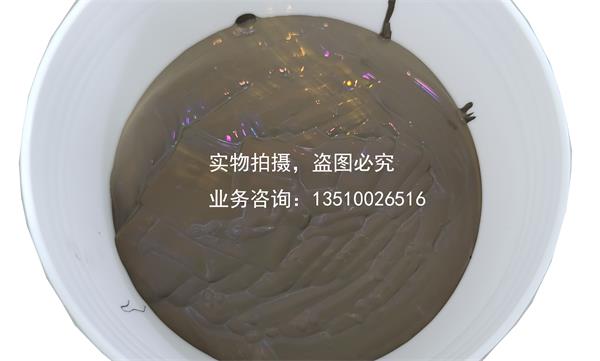
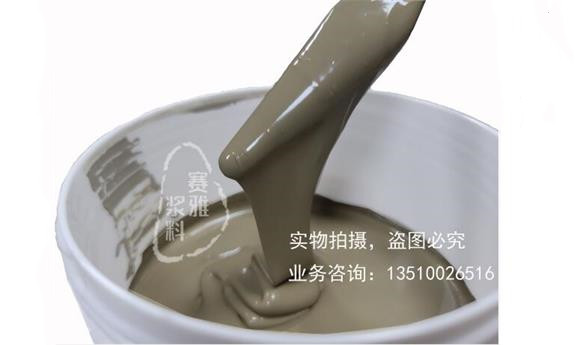
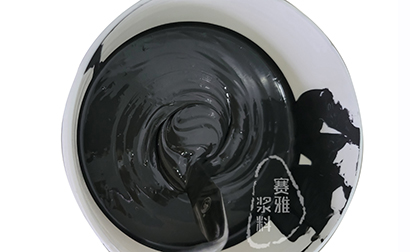
Conductive adhesive It is a conductive and adhesive adhesive that can connect various conductive materials and form a conductive path between the materials to be connected. Conductive adhesives are usually composed of a matrix and conductive fillers. Now, Sya Paste will briefly introduce it to you.
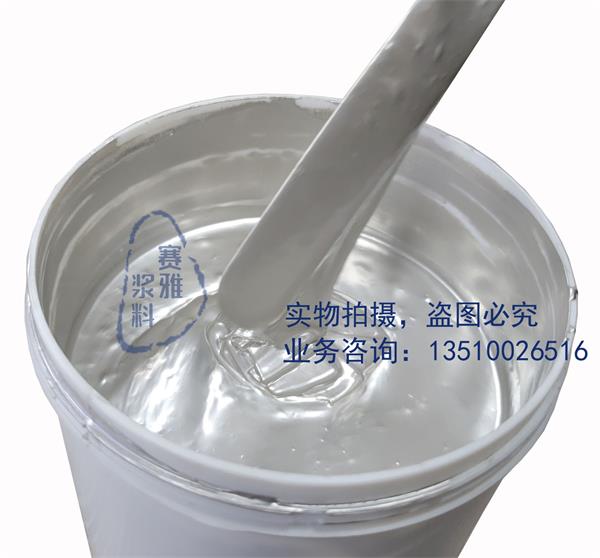
1. Components of conductive adhesive: Matrix
The matrix of conductive adhesive includes prepolymer, curing agent (crosslinking agent), diluent and other additives (plasticizers, coupling agents, defoamers, etc.).
The prepolymer contains reactive groups, which can be cured after the addition of a curing agent. After the prepolymer cures, it forms the molecular framework of the conductive paste and ensures the bonding performance and mechanical properties, and the conductive filler particles can form channels. The commonly used polymer matrices include epoxy resin, phenolic resin, polyimide, polyurethane, etc. Compared with other resins, epoxy resin has the advantages of good stability, corrosion resistance, low shrinkage rate, high bonding strength, wide bonding surface, and good processing performance. Therefore, epoxy resin is the most researched and widely used. The substrate. However, epoxy resin is hygroscopic and has poor heat resistance. Therefore, the modification of epoxy resin is carried out by adjusting the main oxime structure and the substituents of the epoxy resin to obtain modified resins with higher comprehensive performance. Development is ongoing.
The curing agent is a polyfunctional compound that can be attached to the prepolymer to form a network structure and is also a part of the curing system.
The diluent is another crucial component of the conductive paste. It can regulate the viscosity of the system, allowing the conductive particles to be well dispersed in the matrix resin, and at the same time forming good conductive contact between the conductive particles, the adhesive layer, and the bonded electronic components. Diluents are classified into reactive diluents and non-reactive diluents. Reactive diluents contain reactive end groups and can participate in the crosslinking reaction. They do not need to be removed before curing and become part of the system after curing; non-reactive diluents do not participate in crosslinking. They are only used for adjustment and need to be removed before curing.
The prepolymer, crosslinking agent and diluent in the matrix are the main factors influencing the volume change during the curing process. To improve the performance of conductive paste, various additives such as coupling agents, plasticizers and defoamers are sometimes needed to be added.
The coupling agent can enhance the dispersion of conductive fillers in the resin matrix, as well as improve the surface properties of the conductive paste and increase the adhesion of the interface. The addition of plasticizers increases the flexibility and bonding strength of the adhesive layer. During the preparation of conductive adhesives, defoamers can reduce surface tension and eliminate the bubbles generated during the material mixing process.
2. Components of conductive adhesive: Conductive filler
The conductive fillers mainly consist of three types of carbon, metals and metal oxides. The carbon black in carbon materials has good conductivity, but it has problems in processing; graphite is difficult to be crushed and dispersed, and its conductivity varies greatly depending on the production location. Carbon-based fillers are usually selected from the mixture of carbon black and graphite. Metal oxides usually have poor conductivity. The commonly used fillers are mainly metal powders with low resistivity, such as Au, Ag, Cu and Ni.
The Au powder has excellent electrical conductivity and chemical stability, making it the most ideal conductive filler. However, it is expensive and is usually only used when high requirements are imposed. The Ag powder has a relatively low price, good electrical conductivity, and is not prone to oxidation in the air. However, it undergoes electrical migration in humid environments and the electrical conductivity of the conductive paste decreases. The Cu powder and Ni powder have good electrical conductivity and low cost, but they are prone to oxidation in the air, resulting in poor electrical conductivity. Therefore, conductive fillers are usually selected from Ag or Cu.
The particle size and shape of the conductive filler directly affect the conductivity of the conductive paste. Filler with a larger particle size is superior to that with a smaller size, but it leads to a decrease in joint strength. Amorphous (flaky or fibrous) fillers are superior to spherical ones in terms of conductivity and joint strength. However, anisotropic conductive pastes can only use spherical fillers with a narrow particle size distribution. Using fillers of different particle sizes and shapes allows for better conductivity and joint strength.